Female genital rejuvenation is often included as part of amommy makeover, a combination of cosmetic procedures designed to restore a woman’s body after childbirth. This rejuvenation typically involves labia minora reduction or enhancement. Labia minora reduction reshapes or reduces the size of the inner vaginal lips to improve comfort and appearance, while enhancement through fat grafting adds volume and contour by transferring fat from other parts of the body. Vaginal tightening restores muscle tone and firmness to the vaginal canal, which can be affected by childbirth or aging.
Together, these procedures help women regain confidence, improve sexual satisfaction, and address physical discomfort caused by childbirth-related changes. The combination in a mommy makeover allows for a comprehensive approach to post-pregnancy body restoration, targeting both external and internal areas of the genital region. Recovery varies depending on the extent of the procedures but generally involves a few weeks of rest and follow-up care to ensure optimal healing and results.

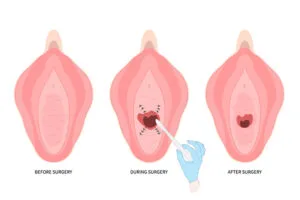
The procedure begins with either general anesthesia or local anesthesia with sedation. The surgical areas are cleaned and marked for precise treatment.
Excess labia minora tissue is trimmed or reshaped for comfort and appearance. For enhancement, purified fat from another body area is injected to restore volume.
A small incision is made inside the vaginal canal. The loosened muscles are tightened using sutures, and excess vaginal lining is removed to restore firmness.
After surgery, the patient is monitored and sent home with instructions on pain management, hygiene, and activity restrictions Regular follow-up ensures healing and desired results.
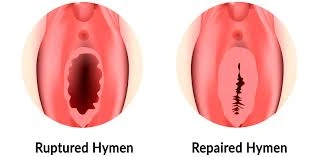
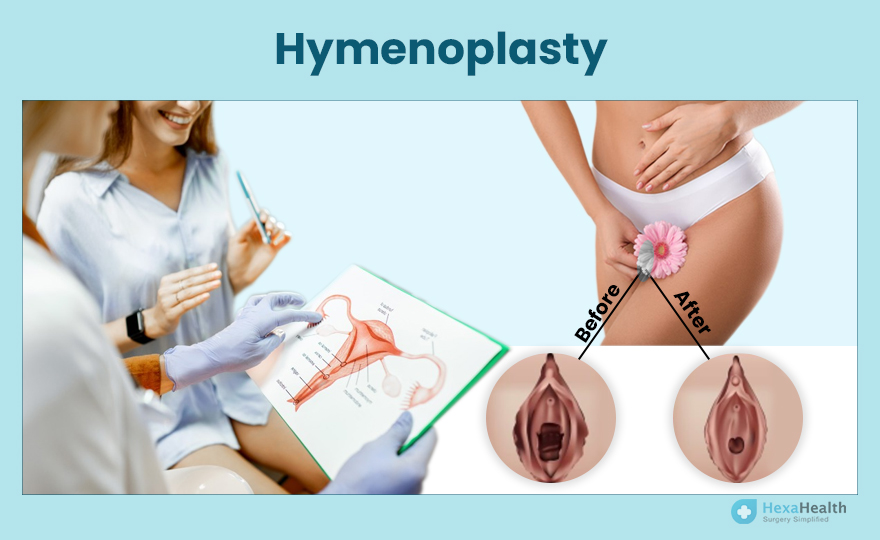
There are three primary types of hymenoplasty procedures, each varying in complexity based on the patient’s needs and the surgeon’s expertise.
Labiaplasty is a surgical procedure that involves reshaping, reducing, or resizing the labia minora (inner vaginal lips), and in some cases, the labia majora (outer lips). It is commonly performed to address discomfort caused by enlarged or asymmetrical labia, which may result from genetics, childbirth, aging, or hormonal changes. Women may choose labiaplasty to improve physical comfort during activities like exercise, intercourse, or wearing tight clothing, as well as for aesthetic reasons. The procedure typically involves trimming excess tissue and contouring the labia for a more balanced and natural appearance.
Clitoral hood reduction is a surgical procedure that involves the removal of excess skin folds surrounding the clitoris, known as the clitoral hood. The goal is to expose more of the clitoris to enhance sexual sensation and improve the genital area's appearance. This procedure is often performed alongside labiaplasty as part of female genital rejuvenation. Women may opt for clitoral hood reduction due to excess tissue causing discomfort, hygiene issues, or reduced sensitivity during sexual activity. The surgery is typically quick, performed under local or general anesthesia, and involves minimal downtime, with most patients resuming normal activities within a few weeks.
Labia majora augmentation is a cosmetic procedure that enhances the fullness and contour of the labia majora (outer vaginal lips). It is often chosen by women who experience volume loss due to aging, weight loss, or hormonal changes, which can lead to a wrinkled or deflated appearance. The procedure typically involves fat grafting, where fat is harvested from another area of the body (like the abdomen or thighs), purified, and injected into the labia to restore a plump, youthful look. In some cases, dermal fillers may be used as an alternative. Labia majora augmentation can improve both appearance and comfort, especially during physical activities or when wearing tight clothing.
Pregnancy and vaginal delivery can stretch and weaken vaginal tissues and muscles, leading to looseness, discomfort, or reduced sexual satisfaction.
Natural aging or menopause can reduce collagen and elasticity in the genital area, causing sagging, dryness, or loss of volume.
Some women may be unhappy with the appearance of their labia or vaginal area and seek surgery to improve symmetry, size, or overall look.
Although rare, some women may consider hymenoplasty after childbirth or physical injury that caused hymenal damage. In such cases, the procedure is performed to restore the body to a previous state, either for personal satisfaction or cultural conformity.
Rejuvenation procedures can enhance sexual sensation and confidence by tightening the vaginal canal and improving clitoral exposure.
Enlarged or elongated labia may cause discomfort during activities like biking, exercise, or intercourse, and can be resolved with labiaplasty.
Preparing for Surgery – 5 Key Steps:
There are three primary types of hymenoplasty procedures, each varying in complexity based on the patient’s needs and the surgeon’s expertise.